
How to Treat Carpet Stains Before They Set

A spilled cup of coffee before work, muddy shoes after a rainy afternoon, or a pet accident discovered too late can make a clean room feel immediately stressful. The good news is that most carpet stains are easier to manage than they look when you respond with the right method and avoid a few common mistakes.
The goal is not to scrub harder. It is to remove as much of the spill as possible without pushing it deeper into the carpet fibers, spreading it outward, or leaving behind sticky residue that attracts more dirt later.
Start With the Right First Response
Time matters with a fresh spill. The longer a liquid, food color, oil, or pet mess sits in carpet, the more likely it is to travel below the surface and bond with the fibers or backing. Still, acting quickly does not mean reaching for every cleaner under the sink.
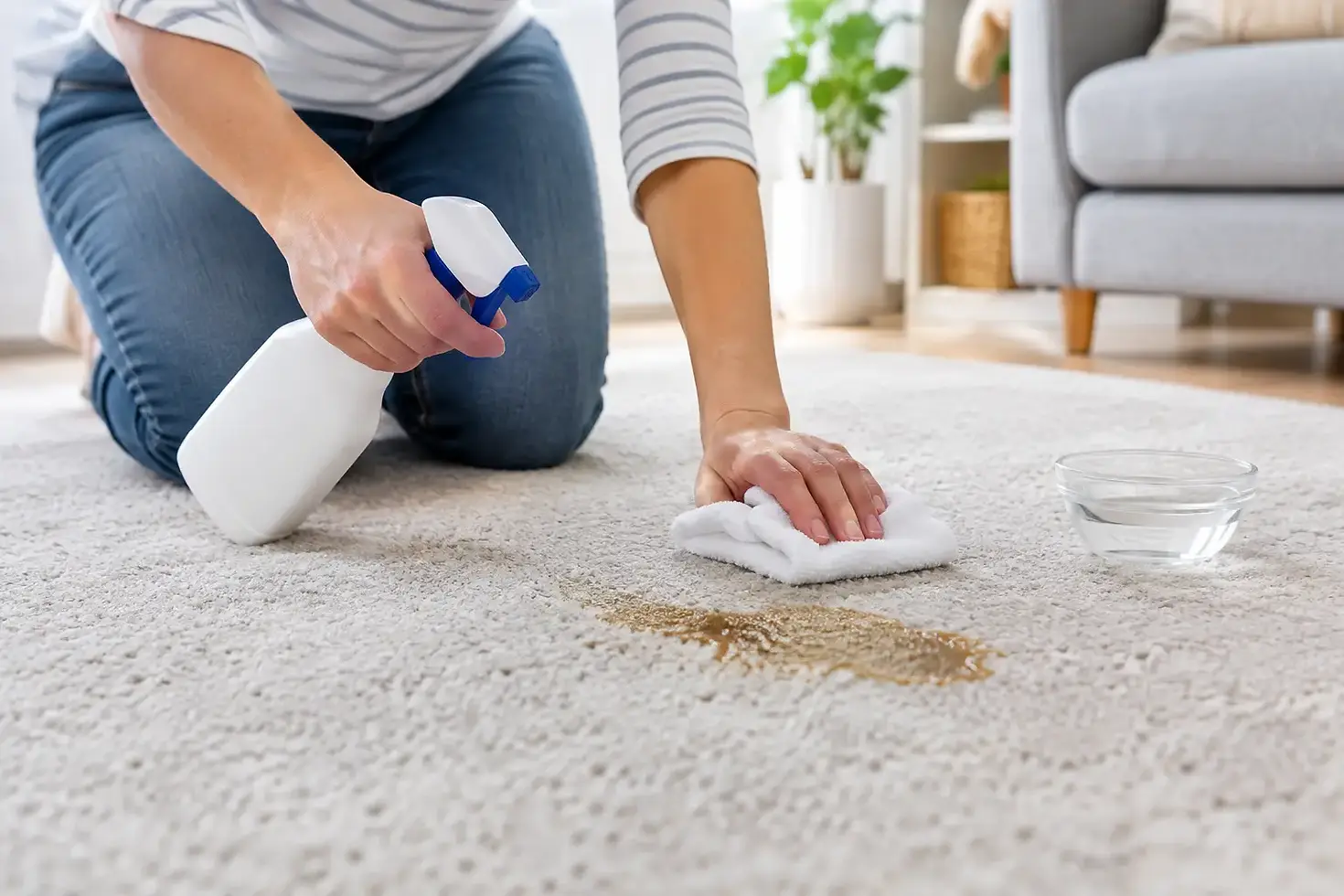
Start by picking up any solids with a spoon or dull edge. Work from the outside of the spot toward the center so the stain does not spread. Then blot the area with a clean white towel, cloth, or paper towel. Press firmly, lift, and move to a clean section of the towel as it absorbs moisture.
Avoid rubbing. Rubbing can rough up the fibers, make the stained area larger, and push the material further down. It can also leave a visible texture difference even after the color is gone.
For many water-based spills, a small amount of cool water followed by more blotting is a sensible first step. Do not soak the carpet. Excess water can reach the padding, slow drying, and create odor concerns, especially in rooms with limited airflow.
Match the Method to the Type of Carpet Stain
Not every stain responds to the same treatment. What works for fruit juice may do very little for cooking oil, and the wrong product can set certain stains or damage delicate carpet fibers.
Coffee, Tea, Juice, and Soda
These common spills often contain dyes, sugar, tannins, or all three. After blotting up the liquid, lightly apply a carpet-safe spot treatment according to its label. Blot again rather than scrubbing, then use a small amount of clean water to rinse away leftover cleaner. Continue blotting until the area is only slightly damp.
Be especially careful with dark coffee, red juice, cola, and brightly colored sports drinks. A stain may look lighter after the first pass but reappear as the carpet dries if residue remains below the surface.
Grease, Butter, Makeup, and Cooking Oil
Oily stains need a different approach because water alone will not break them down. First, remove excess material without smearing it. A small amount of an appropriate carpet spot cleaner can help lift the oil, but test any product in an inconspicuous area first.
Grease can be deceptive. The dark appearance may fade quickly, while an invisible oily residue stays behind and later collects soil. If the spot feels tacky or becomes dark again after a few days, it likely needs deeper cleaning.
Pet Accidents and Odors
Pet stains require thorough cleanup, not just surface blotting. Urine can reach the carpet backing and padding, where odor-causing residue remains even after the carpet looks clean. Use an enzyme-based product designed for pet accidents if it is safe for your carpet type, and follow the directions carefully.
Do not use heat on the area before it is fully treated. Heat can make certain organic stains and odors harder to remove. If the accident is old, recurring, or covers a larger area, professional extraction is often the more reliable choice.
Mud, Dirt, and Tracked-In Soil
Let wet mud dry completely before attempting to remove it. Trying to wipe wet mud usually spreads it into surrounding fibers. Once dry, vacuum the area carefully to remove loose soil, then treat any remaining discoloration with a suitable carpet cleaner.
If a walkway, entryway, or office corridor continues to look dark even after vacuuming, the issue may be embedded soil rather than a single spot. Regular professional cleaning can make a noticeable difference in these high-traffic areas.
What to Avoid When Removing Carpet Stains
A strong cleaner and aggressive scrubbing may feel productive, but they can create a tougher problem. Bleach, harsh degreasers, and cleaners not intended for carpet can remove color, weaken fibers, or leave a residue behind. Mixing cleaning products is also a bad idea, particularly products containing bleach or ammonia.
Too much soap is another common mistake. Dish soap may seem harmless, but even a small amount can be difficult to rinse completely from carpet. Leftover soap attracts dirt, so the same area can look dirty again quickly.
Hot water is not always better. It can set protein-based stains such as blood, milk, and some pet messes. Cool or lukewarm water is generally the safer choice unless a carpet manufacturer or cleaning product directs otherwise.
Finally, do not rely on home remedies without considering the carpet itself. Wool, natural fibers, patterned carpets, and older carpets may react differently than modern synthetic carpet. When you are uncertain, protect the carpet by using a professional service instead of experimenting on a visible area.
When a Stain Needs Professional Cleaning
Some stains are not really surface stains anymore. They have moved into the carpet backing or padding, combined with old soil, or left behind residue that household spot cleaning cannot fully reach. Professional-grade extraction equipment is designed to flush out contamination while removing much more moisture than a rental machine or household cleaner can manage.
Consider scheduling professional help when a stain keeps returning after it dries, has a lingering odor, covers a large section of carpet, or involves pet waste, wine, grease, ink, or water damage. It is also a practical choice before move-out inspections, property showings, family gatherings, or important client visits.
For offices, retail spaces, and rental properties, carpet appearance affects how people view the entire space. A stained reception area or hallway can make an otherwise well-maintained business look neglected. Consistent janitorial care and periodic carpet cleaning help protect that professional appearance without placing the burden on staff or tenants.
Carpet and Janitorial J&J provides dependable carpet cleaning for homes and businesses in Fremont and nearby communities. A free and fast estimate can help you decide whether a stubborn spot needs targeted treatment or a deeper cleaning for the whole room.
Help Prevent Future Carpet Stains
Prevention does not require a perfect household or a no-food office policy. It means making spills easier to handle before they become permanent-looking marks. Keep a few clean white towels and a carpet-safe spot cleaner available, especially in dining areas, living rooms, break rooms, and entryways.
Vacuuming regularly also matters more than many people realize. Dry soil has sharp edges that work their way down between carpet fibers as people walk across it. Over time, this can dull the carpet's appearance and make it harder to restore with spot treatment alone.
Entry mats, a shoes-off routine where practical, and quick attention to spills all reduce the wear that shows up first in high-traffic areas. Homes with children or pets and businesses with daily foot traffic may simply need professional cleanings more often. The right schedule depends on use, carpet color, fiber type, and how important a consistently polished appearance is to the space.
A clean space makes a real difference in how a home feels and how a business is received. When a spill happens, blot patiently, use products with care, and know when deeper cleaning will save you time, frustration, and the cost of replacing carpet too soon.


Comments