
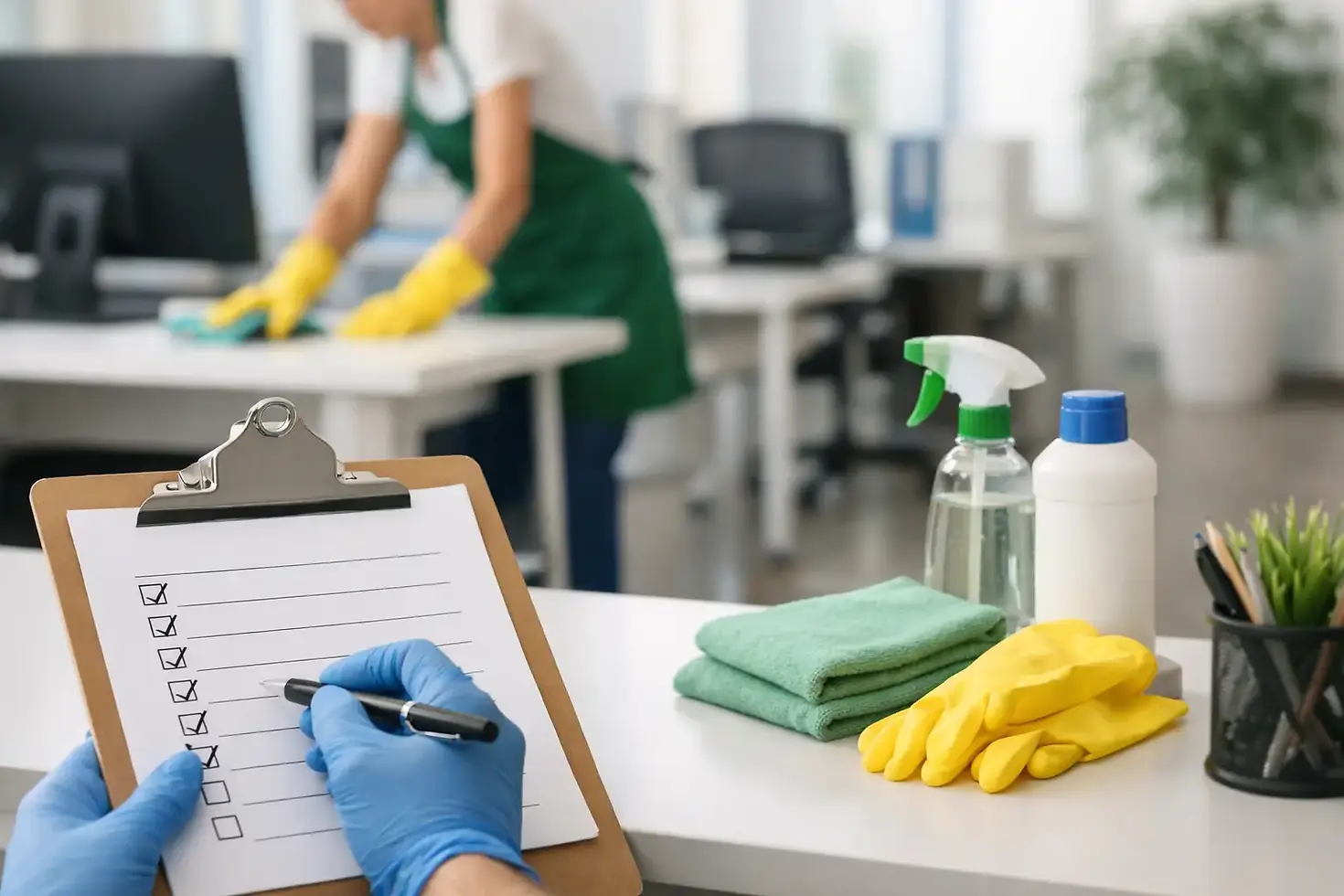
Office Cleaning Checklist Example for Cleaner Workdays
- Carpet and Janitorial J&J Team

- Aug 2
- 5 min read
A busy office can look fine at 9 a.m. and feel neglected by 3 p.m. Coffee spills, full trash bins, smudged entry glass, and overlooked restrooms all affect how employees and visitors experience the space. This office cleaning checklist example gives Fremont businesses a practical way to organize routine cleaning, set clear expectations, and avoid the small details that quickly become bigger problems.
The best checklist is not the longest one. It matches your office size, foot traffic, floor types, restroom use, and whether clients regularly visit. A quiet back-office suite needs a different routine than a medical-adjacent office, a property management office, or a customer-facing showroom.
Start With Zones, Not Random Tasks
Cleaning is more consistent when the office is divided into clear zones. Most workplaces have an entry and reception area, individual workspaces, common areas, restrooms, break rooms, and floors. Each zone has different needs, and assigning tasks by area makes it easier to see what has been completed.
Before using a checklist, walk through the office at the end of a typical workday. Notice where trash accumulates, which doors collect fingerprints, where floors show dirt first, and which surfaces receive the most hands. Those observations should guide the schedule instead of relying on a generic list that may not fit your building.
Daily cleaning should focus on appearance, hygiene, and removing anything that could cause odors or create a safety concern. Weekly and monthly tasks can handle the deeper work that keeps the office in good condition over time.
Daily Office Cleaning Checklist Example
Daily service is the foundation of a professional-looking workplace. For offices open five or more days a week, it is usually best completed after business hours or during low-traffic periods. In a smaller office, some tasks may be handled by staff during the day, while a cleaning team takes care of detailed work on a set schedule.
Use this daily checklist as a starting point:
Empty trash and recycling bins, replace liners when needed, and remove waste from break rooms and restrooms.
Wipe and disinfect high-touch points, including door handles, light switches, elevator buttons, shared equipment, and reception counters.
Clean restroom sinks, toilets, mirrors, dispensers, and touchpoints; restock soap, paper towels, toilet paper, and sanitary supplies.
Wipe break room counters, tables, appliance exteriors, and sink areas; remove food debris and empty coffee grounds.
Vacuum carpeted walkways and entry mats, then sweep or damp mop hard floors as needed.
Spot-clean interior glass, front doors, fingerprints, spills, and visible marks on walls or partitions.
Straighten reception areas, conference rooms, and shared spaces so they are ready for the next workday.
The word “disinfect” matters, but it should be used correctly. Cleaning removes visible soil, while disinfecting is intended to reduce germs on properly cleaned surfaces. High-touch areas deserve regular attention, especially during cold and flu season. However, spraying every surface without first removing dust and dirt is not an effective substitute for careful cleaning.
Weekly Tasks That Protect the Details
Weekly service gives your office the attention that daily cleaning does not always allow. It is where a janitorial routine begins to look more polished and less rushed. These tasks are especially useful for offices that welcome customers, vendors, prospective tenants, or job candidates.
A weekly checklist should include dusting accessible ledges, window sills, baseboards, blinds, and furniture surfaces. Clean conference tables thoroughly, including chair arms and shared presentation equipment. Wipe cabinet fronts, interior glass partitions, and doors beyond the most visible touchpoints.
Break rooms need a closer look each week. Clean the microwave interior, wipe refrigerator handles and exterior surfaces, sanitize the sink and faucet, and check for expired food or spills. If employees share a refrigerator, management should set a clear policy for labeling and removing items. A cleaning crew can clean the appliance, but they should not have to guess which lunches belong to whom.
Weekly floor care depends on the material. Carpets may need more detailed vacuuming around desks, edges, and under movable chairs. Hard floors may benefit from a more thorough mop and attention to corners where dust collects. If entryways are exposed to rain, landscaping debris, or heavy foot traffic, those floors may need additional service more often than once a week.
Monthly and Seasonal Cleaning
Monthly tasks help prevent gradual buildup that employees stop noticing but visitors often see right away. They also protect your furnishings and flooring, which can save money over time.
Schedule a monthly inspection of office chairs, desk bases, vents, high ledges, baseboards, and behind accessible furniture. Dust air returns and clean visible cobwebs. Wipe down wall marks where appropriate, clean interior windows more thoroughly, and polish metal fixtures that have lost their shine.
Carpet care should be part of the plan, not an emergency response after stains appear. Regular vacuuming removes dry soil, but periodic professional carpet cleaning reaches the embedded dirt that dulls fibers and holds odors. The right frequency depends on traffic. A small office with a few employees may need professional service less often than a busy office with customers, children, pets, or frequent deliveries moving through the space.
Seasonal cleaning is also useful in Fremont offices. During wetter months, entry mats and hard floors need extra attention to reduce tracked-in moisture and grit. In warmer, drier periods, dust can build up faster around entrances, vents, and window areas. Adjusting the checklist by season helps keep standards steady rather than reacting after the office starts looking worn.
How to Assign Responsibilities Without Gaps
A checklist only works if everyone knows who owns each task. For an in-house routine, assign responsibility by zone and record the date and initials after completion. For a professional janitorial service, agree on a written scope of work that identifies what is cleaned each visit, what is handled weekly, and which services require separate scheduling.
Be specific about supplies and access. The cleaning team should know where trash liners, restroom products, keys, alarm instructions, and building rules are kept. Office managers should also communicate which areas contain confidential documents, sensitive equipment, or restricted materials. Desks are often personal work areas, so a good policy distinguishes between cleaning shared surfaces and handling individual belongings.
Quality checks should be simple. Once a week, take five minutes to inspect the entry, restroom, break room, and floors. Look for odors, streaks, empty dispensers, corners that were missed, or supplies running low. Addressing a concern early is easier than waiting until staff members lose confidence in the cleaning routine.
When a Standard Checklist Needs More Support
Some offices need more than a basic nightly clean. High-traffic locations, businesses with frequent client meetings, and offices with carpeted common areas may benefit from a customized schedule. The same is true when restrooms are heavily used or employees work long hours and use break rooms throughout the day.
A professional cleaning partner can bring consistency, trained staff, and commercial-grade equipment to the work that is difficult to manage internally. Carpet and Janitorial J&J helps local businesses create cleaning plans that fit their space, schedule, and priorities, without adding unnecessary services.
A clean office makes a real difference in how people feel when they walk in, work together, and welcome clients. Use this checklist as a working document, revise it as your needs change, and make room for the details that show your team and visitors they are cared for.


Comments